
Cosmetic Dentistry
Full Arch Restoration Through All-on-4 Dental Implants in Fremantle

What we do?
Four Implants Positioned to Support A Full Arch of Replacement Teeth
The two front implants sit upright in the jaw. The two back implants angle towards the rear of the mouth. This angled placement can take advantage of remaining bone, even when some bone loss has occurred.
Unlike approaches that require 6 to 8 implants, All-on-4 uses fewer posts. This design may reduce treatment complexity for some patients. The prosthetic arch attaches directly to the implants. It does not rest on the gums like a traditional denture. Your dentist will assess your jaw structure and bone quality to determine whether this tooth-replacement option is appropriate for you.

RIGHT CANDIDATE
Who Can Consider All-on-4 Dental Implants?
Your dentist will conduct a thorough assessment before recommending this approach. Factors such as bone density, medical history, and lifestyle habits, such as smoking, all influence suitability. Each case is unique.
Benefits
Potential Benefits of All-on-4 Dental Implants for Patients
All-on-4 implants are designed to provide a fixed prosthesis that stays in place during eating and speaking. Many patients find this offers greater stability than removable dentures.
The angled implant placement may reduce the need for bone grafting in some cases. This can shorten treatment time for eligible patients. Individual outcomes vary, and a consultation is needed to discuss what may be achievable for your circumstances.

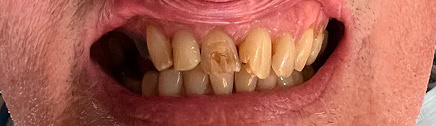
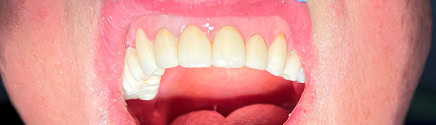
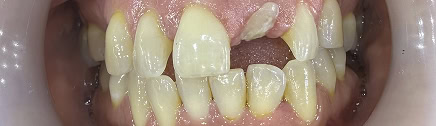
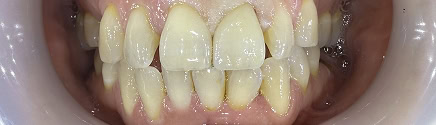
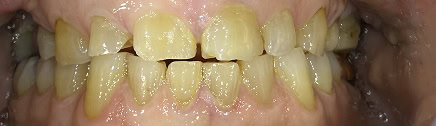
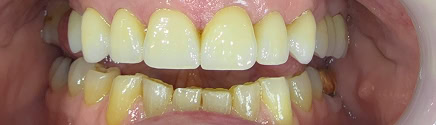
OUR SMILE GALLERY
Examples of Our Dental Work
WHAT MAKES US DIFFERENT
Why Choose On Point Dental for Dental Implants
Complete Implant Treatment In-House
Performed by: Dr Jeetash Kumar - General Dentist, AHPRA Registration No. DEN0002285548
We manage the full implant process in our Fremantle clinic, from assessment and planning to placement and restoration. Keeping treatment in one clinic supports consistent communication and coordinated timing between stages. As implant outcomes vary based on anatomy and healing, we discuss individual considerations to help you understand the overall treatment pathway and expected timelines.
Accessible Implant Options
We aim to make implant treatment accessible by accepting major health funds and offering payment plans with weekly repayments and interest-free periods. Terms and conditions apply, including eligibility requirements and lender approval. We provide clear cost estimates and explain coverage considerations to help you plan treatment in a transparent, organised way that supports your financial preferences.
Focus on Patient Comfort
We understand implant treatment may feel daunting, so we prioritise clear guidance and supportive care throughout each stage. Appointment structures aim to reduce waiting times, and we explain what to expect before and after procedures. While comfort levels vary between individuals, our team works to create a calm environment and address questions so patients feel well-supported.
New Patient Special Offer
$299
Dental Package Available for New Patients: Complete Preventive Care Services in One Appointment
HEALTH FUNDS & PAYMENT OPTIONS
Quality Dental Care that Fits Your Budget


HBF Member Plus Preferred Provider
- Eligible HBF Member Plus members can receive reduced gap payments on many dental services.
- We process your health fund claim on the spot, and you’ll pay only the gap amount.
- Our team can check your cover and provide an estimate of your out-of-pocket costs before treatment begins.
- Being a preferred provider means we meet HBF's quality and service standards, giving you added security in your care.
- HBF Member Plus preferred provider status allows eligible members to access reduced payments. Terms and conditions apply.


NIB First Choice Preferred Provider
- NIB First Choice members may receive higher benefits and lower gap payments when they visit our clinic.
- We submit your claim directly to NIB, making the process straightforward and reducing paperwork for you.
- Our reception team can explain your NIB benefits and help you understand what's included in your cover.
- We're committed to transparent pricing, so you'll know your expected costs before we start any treatment.






Flexible Payment Plans Available
Fund My Dental


YOUR FIRST VISIT
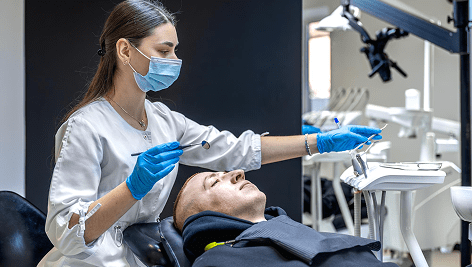
What to Expect When You Visit
On Point Dental
Schedule Your Visit
We Check: Teeth, gums, jaw joints, oral cancer screening, bite alignment, existing dental work
Fill Out Your Patient Forms
What to Bring: Health fund card, Medicare card (if applicable), list of current medications
Detailed Oral Assessment
We Check: Teeth, gums, jaw joints, oral cancer screening, bite alignment, existing dental work
Treatment Plan Discussion
Transparent Pricing: All costs explained upfront, payment plans available, health fund rebates calculated.
Begin Your Dental Care
Ongoing Care: Regular check-ups every 6 months, reminders sent, family appointments coordinated
THE TEAM
Our Friendly Team - Meet The Faces Behind Your Smile
Our dental team brings diverse training and experience to provide quality care, and they’re supported by our skilled dental assistants and administrative team, who help make your visit run smoothly.
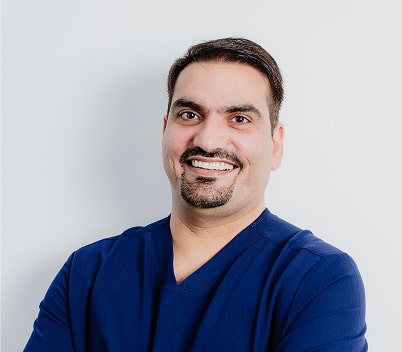
Credentials




Credentials


Credentials


Special Interests
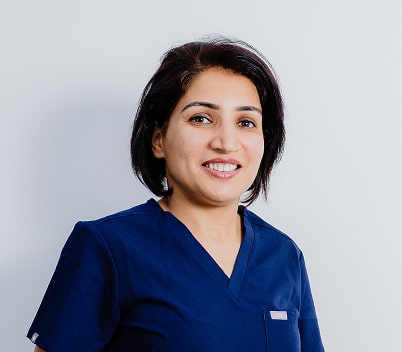
Dr Ahlawat is a certified Invisalign provider with experience across multiple countries, offering cosmetic dentistry, orthodontic treatment, and supportive care for patients who feel anxious about dental visits.
Credentials



FAQ
Frequently Asked Questions
What are All-on-4 dental implants?
All-on-4 dental implants are a full arch restoration approach designed for people who have lost most or all of their teeth in one or both jaws. This procedure uses four strategically positioned implants to support a complete arch of replacement teeth.
Key features of All-on-4 dental implants include:
- Four implants per arch:
Usually, two are placed at the front of the jaw in an upright position, and two at the back at an angle; exact positioning depends on your jaw structure. - Angled implant placement:
The angled positioning allows the implants to take advantage of available bone, which may reduce the need for bone grafting in some prosthetic cases. - Fixed prosthesis:
The replacement teeth are securely attached to implants and do not need to be removed for cleaning like traditional dentures. - Full arch restoration:
All teeth in one jaw are replaced with a single prosthetic arch supported by the four implants.
This option for tooth replacement in Fremantle provides stability that many patients value for eating and speaking. However, suitability varies from person to person. A thorough dental assessment is required to determine whether this approach is appropriate for your circumstances.
How do All-on-4 dental implants work?
All-on-4 dental implants work by using four titanium posts that are surgically placed into your jawbone to support a full arch of replacement teeth.
The implants integrate with the bone over time through a process called osseointegration. This process involves the bone growing around the implant surface to create a secure foundation.
Here’s how the All-on-4 system functions:
- Strategic implant positioning:
The front two implants are positioned vertically, while the back two implants are angled to distribute force evenly across the jaw when you chew or bite. - Bone integration:
The titanium implants are designed to bond with your jawbone over several months through osseointegration. When successful, this creates a stable foundation similar to natural tooth roots. - Abutment connection:
Special connectors called abutments are attached to the implants, serving as the link between the implants and the prosthetic arch. - Fixed prosthesis attachment:
Your replacement teeth are secured to the abutments, creating a fixed structure that functions similarly to natural teeth.
This approach takes advantage of areas where bone density is often better preserved and, in many cases, helps avoid sensitive structures like nerves and sinuses.
Many people find they can replace missing teeth with this method and experience improved function compared to removable dentures.
Your dentist will assess your jaw structure, bone quality, and overall oral health to determine if this method is suitable for your needs.
What is the difference between All-on-4 and traditional dental implants?
All-on-4 and traditional dental implants differ in several key ways:
- Number of Implants:
- All-on-4 uses four implants per arch to support a full set of replacement teeth.
- Traditional full-arch implants require 6 to 8 implants per jaw.
- Implant Placement:
- All-on-4 implants are placed at specific angles—two straight at the front and two angled at the back.
- Traditional implants are placed vertically throughout the jaw.
- Bone Grafting Requirements:
- All-on-4 may reduce the need for bone grafting in some cases by placing implants at an angle that leverages available bone.
- Traditional implants may require bone grafting procedures if bone volume is insufficient, which can add months to the process.
- Treatment Timeline:
- In many cases, All-on-4 allows a temporary prosthesis to be attached on the same day as surgery.
- Traditional implants may require several months of healing before any prosthesis is attached.
- Prosthesis Type:
- All-on-4 supports a fixed full arch prosthesis that replaces all teeth in one jaw.
- Traditional implants can support individual crowns, bridges, or full arches, depending on how many teeth need replacement.
Both options provide fixed restorations that do not need to be taken off daily. Your dentist will evaluate your specific oral health, bone structure, and restoration needs to recommend the approach that may be suitable for you.
Are All-on-4 implants removable?
All-on-4 implants are designed as a fixed full-arch restoration. The prosthetic arch is securely attached to the dental implants and remains in place at all times. This differs from traditional dentures, which patients take out daily for cleaning.
The prosthesis is not intended to be taken off by patients. However, your dentist can detach it during professional maintenance appointments if required. For everyday care, you clean All-on-4 implants as you would natural teeth — with regular brushing and flossing, without removing them.
The fixed design of All-on-4 implants offers stability and comfort during eating and speaking compared to traditional dentures. However, it also means consistent daily cleaning and regular professional care are essential.
Your dentist for tooth replacement in Fremantle will provide personalised guidance during your consultation.
Can you get All-on-4 implants if you have bone loss?
All-on-4 implants may be suitable for some people with bone loss, although each case is different. The angled placement of the back implants helps maximise contact with available bone. This design can sometimes allow treatment even when some bone has been lost.
Your dentist will assess the quality and quantity of bone in your jaw using imaging such as CT scans. If there is enough bone in key areas, All-on-4 treatment may be possible. When bone loss is more severe, additional procedures such as bone grafting may be needed first.
Several factors influence suitability, including the location and extent of bone loss, your general health, and any medical conditions that may affect healing.
Dental restoration options vary, and your dentist will discuss what approach is most appropriate for your circumstances.
What does the All-on-4 dental implant procedure involve?
The All-on-4 dental implant procedure involves several key stages:
- Initial Consultation and Assessment
Your dentist will examine your oral health, take detailed scans or X-rays of your jaw, and discuss your medical history. This information helps determine whether you are a suitable candidate and allows for precise planning of implant placement. - Surgery Day
On the day of surgery, any remaining teeth that need extraction will be removed. Four implants are then placed into your jawbone—two at the front, positioned vertically, and two at the back at an angle. This is performed using local anaesthesia, and sedation options may be available depending on your needs and the dental clinic’s offerings. - Temporary Prosthesis Placement
In many cases, a temporary prosthetic arch can be attached to the implants on the same day as surgery. This allows you to leave with functional teeth, though you will need to follow specific dietary and care instructions during the healing period. - Healing and Integration Phase
Over the following months, the implants integrate with your jawbone through osseointegration. During this time, you will attend follow-up appointments to monitor healing and confirm that the implants are bonding properly with the bone. - Final Prosthesis Creation
Once the implants have fully integrated, which can take several months, your dentist will take impressions and create your final prosthetic arch. This custom-made prosthesis is designed for long-term use and is secured to the implants.
The specifics of All-on-4 dental implants in Fremantle may vary between dental clinics, so discuss the exact steps and timeline with your dentist during your consultation.
Any surgical or invasive procedure carries risks. It is important to seek a second opinion from an appropriately qualified health practitioner before proceeding.
How long does the All-on-4 dental implant process take?
The All-on-4 dental implant process typically unfolds over several months, though the exact timeline varies based on individual factors.
The initial consultation and planning phase usually takes place over one or two appointments.
Surgery day itself usually takes several hours per arch. Many patients receive a temporary prosthesis on the same day, allowing them to leave with functional teeth. However, implants generally require 3 to 6 months to integrate with the jawbone before the final prosthesis is placed.
Several factors can affect the timeline for those seeking to replace missing teeth:
- If teeth need to be extracted before implants are placed, healing time may be added depending on your situation.
- Dense, healthy bone may support faster integration, while softer bone may require more time.
- Conditions that affect healing, such as diabetes or smoking, may extend the process.
- Everyone heals at different rates, and your dentist will monitor your progress throughout.
Once the implants have integrated, the final phase involves creating and fitting your final prosthesis. This usually requires several appointments over a few weeks.
From start to finish, you can expect the full All-on-4 process to take anywhere from four to nine months in most cases.
What is the recovery time for All-on-4 dental implants?
Recovery from All-on-4 dental implants occurs in stages. Initial healing occurs in the days and weeks following surgery, and full integration takes several months.
In the first few days after surgery, you may experience swelling, bruising, and discomfort, which are normal responses. Many people find that these symptoms peak around day two or three and then gradually improve.
Your dentist will likely recommend a soft diet and careful oral hygiene during the initial healing period. Many people can return to work within 3 to 7 days, depending on how they feel, though some may require a longer recovery. Your individual experience may vary.
Several factors can influence recovery time for dental restoration procedures:
- Age and overall health:
Your body’s natural healing capacity plays a role in how quickly you recover. - Smoking:
People who smoke may experience slower healing and higher complication rates. - Oral hygiene:
Maintaining clean implants and surrounding tissues supports better healing outcomes. - Following post-operative instructions:
Adhering to dietary restrictions and care guidelines can help prevent complications. - Pre-existing conditions:
Conditions such as diabetes may affect healing time.
Your dentist will provide specific recovery guidelines and monitor your progress through follow-up appointments. If you experience severe discomfort, excessive bleeding, or signs of infection, contact your dental clinic promptly.
Can you eat normally with All-on-4 dental implants?
During the initial healing phase, you will need to follow a modified diet. Start with soft foods and gradually introduce firmer textures as your dentist advises.
Once your final prosthesis is fitted, you can generally eat most foods. Some caution may still be helpful with very hard or sticky items.
Many people who have tooth replacement in Fremantle with All-on-4 implants find that eating feels more natural compared to removable dentures.
The fixed prosthesis means there is no movement during chewing. The implants provide more biting force than dentures resting on gums alone.
Do All-on-4 implants affect speech?
All-on-4 implants may affect speech initially, but most people adapt within a few weeks as they become accustomed to the new prosthesis.
When you first receive your prosthesis, you may notice changes in how you pronounce certain sounds. This happens because the prosthesis slightly changes the shape and space inside your mouth.
Sounds that involve the tongue touching the roof of the mouth or the back of the teeth, such as “s,” “t,” or “th,” may feel different at first. Many patients find that reading aloud or practising conversation, helps them adjust more quickly.
The impact on speech is generally less pronounced with All-on-4 implants compared to traditional dentures because the prosthesis is fixed in place and does not move during speech. Most people report that once the adjustment period passes, speech feels natural and clear.
Tooth loss treatment with All-on-4 often allows for better long-term speech outcomes than removable dentures for many patients.
How do you clean All-on-4 dental implants?
Cleaning All-on-4 dental implants requires daily attention, much like caring for natural teeth. Proper cleaning helps maintain the implants and the tissues around them.
You will need to clean both the visible prosthetic teeth and the areas where the prosthesis meets your gums:
- Brushing:
Use a soft-bristled toothbrush to clean all surfaces of the prosthetic teeth at least twice daily. Pay special attention to the areas where the prosthesis meets your gum line. - Interdental brushes:
Small interdental brushes can reach underneath and around the prosthesis to clean areas that regular toothbrushes cannot easily access. - Flossing:
Special floss designed for implants or a water flosser can help clean between the prosthesis and your gums. - Antimicrobial rinse:
Your dentist may recommend a specific mouth rinse to help control bacteria around the implants.
Daily cleaning is particularly important for missing teeth replacement with All-on-4 because bacteria and plaque can build up around the implants.
During maintenance visits, your dentist may temporarily lift or disconnect the prosthesis to clean the area underneath.
How often should you see the dentist with All-on-4 implants?
Regular dental visits are important for maintaining All-on-4 implants and monitoring the health of your surrounding tissues. Most dental clinics recommend seeing your dentist at least twice a year for routine check-ups and professional cleaning, though your specific needs may vary.
During these appointments, your dentist will examine the implants, check the prosthesis for wear or damage, and assess the health of your gums and remaining bone. They will also perform professional cleaning to clear away plaque and calculus from areas you cannot reach at home.
Some patients may need more frequent visits, particularly in the first year after receiving All-on-4 dental implants in Fremantle. Your dentist may schedule appointments every three to four months during the first year to closely monitor healing and integration.
If you have diabetes, a history of gum disease, or other conditions that affect oral health, more frequent visits may be recommended.
What happens if an All-on-4 implant fails?
While All-on-4 implants generally have high success rates, failures can still occur. If this happens, your dentist will assess the situation and discuss management options.
Implant failure may occur early if the implant does not bond properly with the bone. It can also happen later due to infection or bone loss.
Possible signs of a problem include ongoing discomfort, swelling, looseness, or difficulty with your dental prosthesis. If these occur, contact your dentist promptly for assessment.
The response to an implant failure depends on when and why it occurs. Early failures may involve taking out the implant and allowing healing before a new placement.
Later failures may involve stabilising the surrounding tissues or bone first. Your dentist will outline the most appropriate options for your situation.
What factors affect the longevity of All-on-4 implants?
The longevity of All-on-4 implants depends on multiple factors, some within your control and others related to your overall health.
- Oral Hygiene Practices:
Daily cleaning clears away bacteria and plaque that can cause inflammation around implants. Consistent brushing, flossing, and the use of recommended cleaning tools directly affect how long your implants may last. - Regular Dental Visits:
Professional monitoring and cleaning help catch potential problems early. Your dentist can identify issues like early bone loss or loosening before they become serious. - Smoking:
Smoking is associated with higher implant failure rates because it affects blood flow and healing. People who smoke may experience more complications and a shorter implant lifespan. - Teeth Grinding (Bruxism):
Grinding or clenching your teeth puts extra force on implants and the prosthesis. A night guard can help protect your implants if you have this habit. - Overall Health Conditions:
Conditions that affect bone health, such as osteoporosis, or conditions that impair healing, such as uncontrolled diabetes, can influence implant longevity. Managing these conditions with your healthcare provider supports better outcomes. - Initial Integration:
How well the implants integrate with your bone in the first few months sets the foundation for long-term success. Following post-operative instructions carefully during this phase is important.
When patients maintain good oral hygiene and attend regular dental appointments, All-on-4 implants may function for an extended period, though individual longevity varies significantly based on multiple factors.
Are there alternatives to All-on-4 dental implants?
Several options are available for people who need to replace a full arch of teeth. The most suitable choice depends on your oral health, bone structure, budget, and personal preferences.
- All-on-6 or All-on-X Implants
These approaches use more than 4 implants to support a full-arch prosthesis. All-on-6 uses six implants per arch and can provide additional stability in some cases. This may be suggested if you have good bone quality and want the support of more implants. - Full Arch Implants
This method uses six to eight implants per arch, positioned vertically. Individual crowns or a fixed bridge are connected to these implants. It may be suitable if you have sufficient bone across the jaw. - Implant-Supported Overdentures
These are dentures that attach to two to four implants, offering greater stability than traditional dentures while remaining detachable. This option may be more affordable than fixed implant restorations and allows easier cleaning. The denture is designed to be taken out daily for hygiene. - Traditional Dentures
Complete dentures rest on the gums without implant support. They are generally the most affordable way to replace a full arch and do not require surgery. However, they may feel less stable than implant-supported options. - Implant-Supported Bridges
If you still have some natural teeth, implant-supported bridges can replace several missing teeth without affecting healthy adjacent ones. This may be suitable when only part of the arch requires restoration.
Choosing a tooth replacement option in Fremantle involves considering cost, surgery requirements, maintenance needs, and personal goals. Your dentist will evaluate your oral health and bone condition, then explain the benefits and considerations of each approach.
What is the difference between All-on-4 and All-on-6 implants?
All-on-4 and All-on-6 implants are both full arch restoration methods, but they differ in several key ways:
- Number and Placement of Implants:
- All-on-4 uses four implants per arch—two positioned vertically at the front and two angled at the back.
- All-on-6 uses six implants per arch, which may all be placed vertically or with some angled positioning depending on the treatment plan and bone structure.
- Force Distribution:
- All-on-4 distributes chewing force across four implant points.
- All-on-6 distributes force across six implants, which can reduce stress on each implant.
- Bone Requirements:
- All-on-4 is specifically designed to work with less bone because the angled back implants take advantage of available bone in the front of the jaw.
- All-on-6 often requires more available bone throughout the jaw since it involves placing additional implants.
- Procedure Complexity:
- All-on-4 involves placing four implants in a single surgery session.
- All-on-6 involves placing six implants, making it a slightly more involved surgical procedure, though both can usually be completed in one session.
- Cost:
- All-on-4 generally costs less because fewer implants and components are used.
- All-on-6 generally costs more because it involves additional implants and materials.
- Suitability:
- All-on-4 may be recommended when bone is limited or when a less invasive approach is preferred.
- All-on-6 may be suggested when you have good bone quality throughout the jaw, and your dentist believes the additional support would be beneficial.
Both approaches are forms of tooth loss treatment that can restore function and appearance for people who have lost most or all of their teeth.
Your dentist will assess your jaw structure, bone quality, and overall health to recommend the option that may be most appropriate for your circumstances.
Important Information
Any surgical or invasive procedure carries risks. Before proceeding, you should seek a second opinion from an appropriately qualified health practitioner. A consultation is required to assess your suitability for dental implants. Individual circumstances vary, and results may differ between patients.
This information is provided by [Practice Name], [Practice Address]. Principal Dentist: Dr [Dentist Name], Dentist – General Registration, AHPRA Registration Number: [Number]. For appointments or enquiries, contact us on [phone number].
